Launch offer — valid today only

📄 Digital book in PDF · read it on your phone or print it

Preventive Maintenance on Your Piston Single Under Part 43, Drawn Step by Step One Owner Task on Every Page

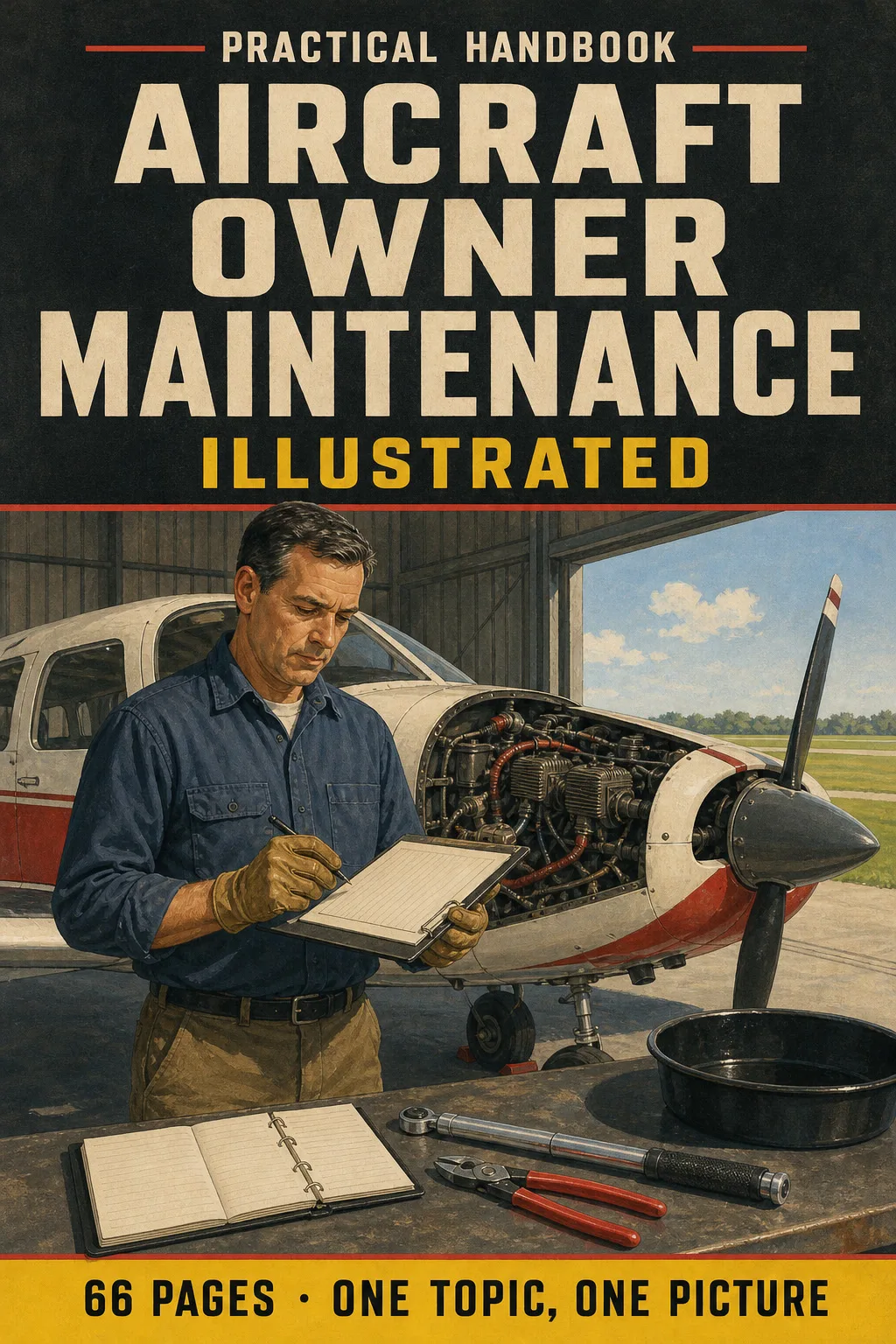
Oil and filter, spark plugs, tire pressure, wheel bearings, safety wire, battery, lubrication and the logbook entry. Every task has its own page: the drawing first, then what you need to remember. 66 illustrated pages.

I WANT TO SEE EVERY TASK DRAWN

🔒 Secure checkout · PDF by email · 30-day guarantee

Every topic, its own pageEach owner task drawn step by step, with the explanation right beside it
66 illustrated pages9 parts, from the owner rule to your one-page owner chart
Up-to-date sources14 CFR Part 43, FAA AC 43.13-1B and your manufacturer's manual
PDF by emailFormat

Look Inside the Book

Every page has one big drawing and a box with the steps and numbers you need to know:

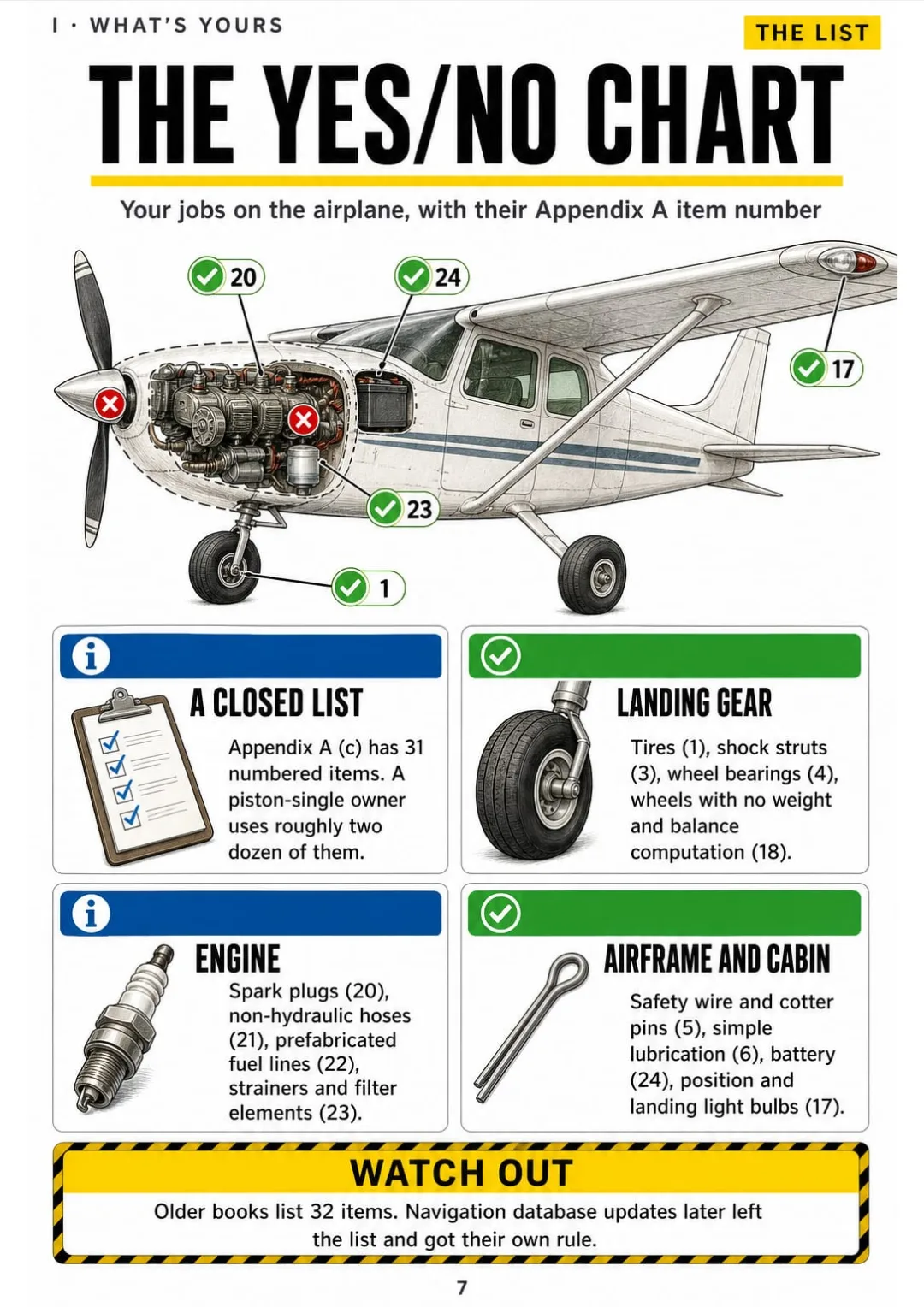
Appendix A (c): 31 numbered items; tires, plugs, filters, battery and bulbs are on it.
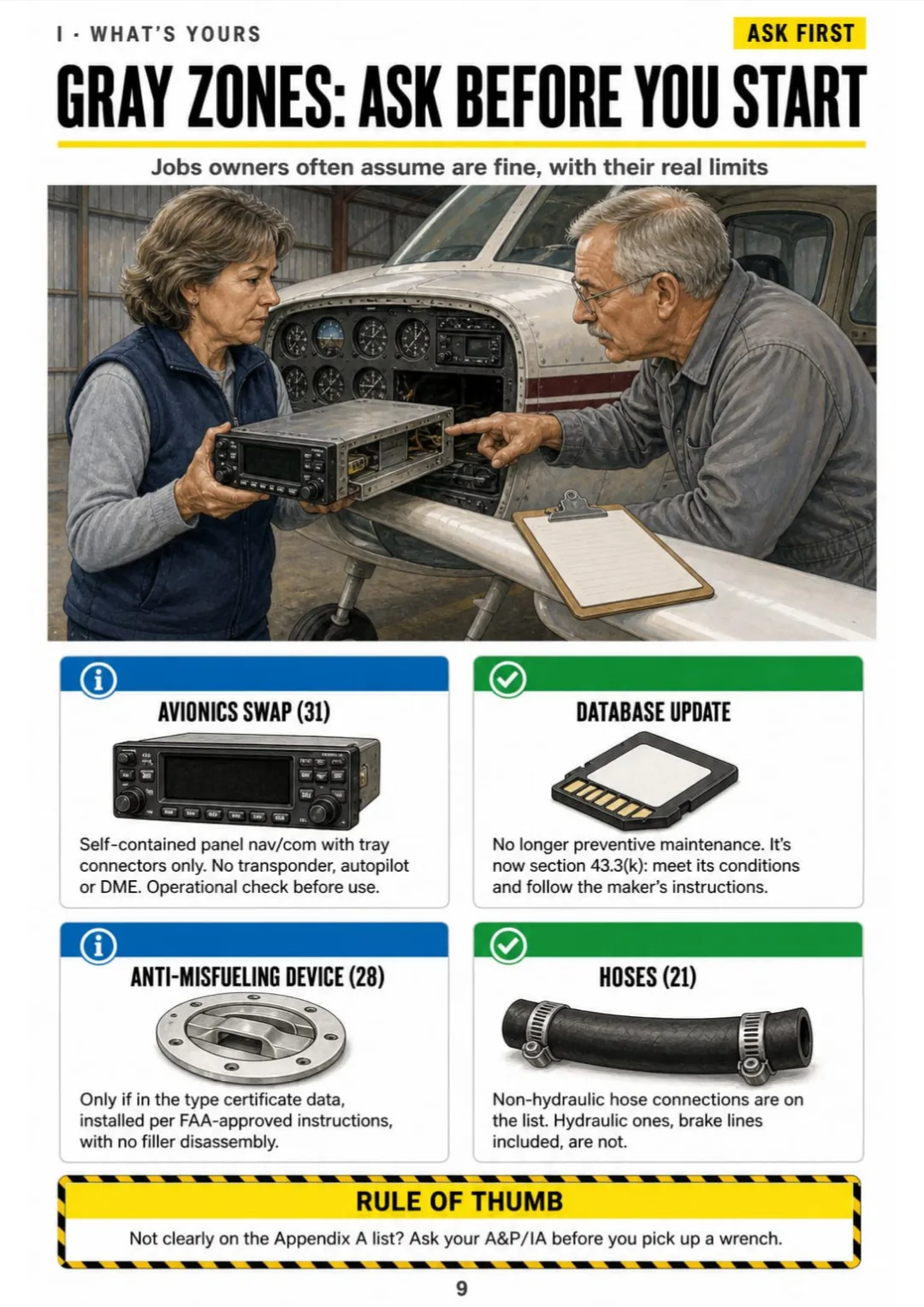
Avionics swaps, database updates and anti-misfueling devices each come with conditions you must meet.
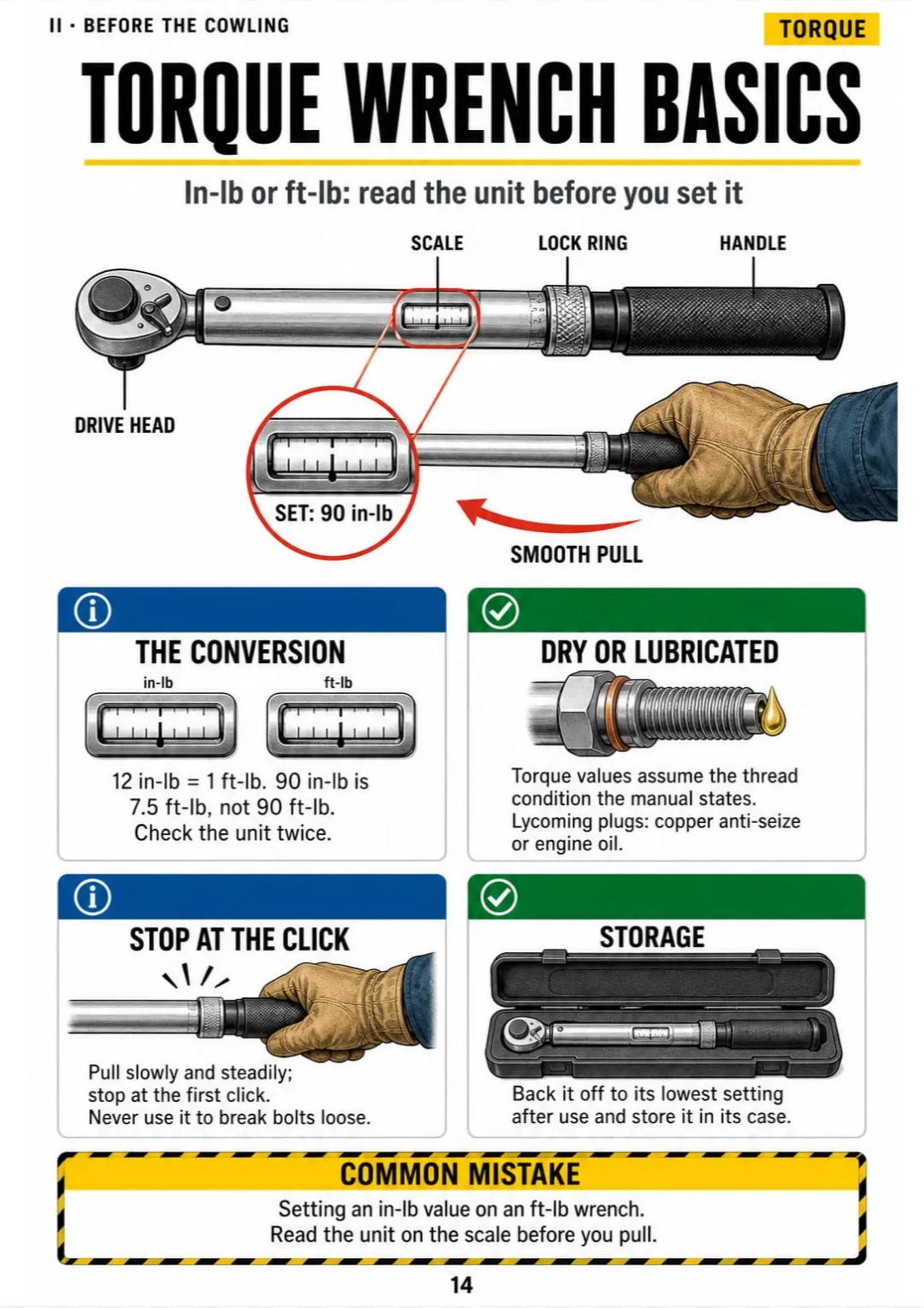
12 in-lb = 1 ft-lb · smooth pull · stop at the click · store at lowest setting.
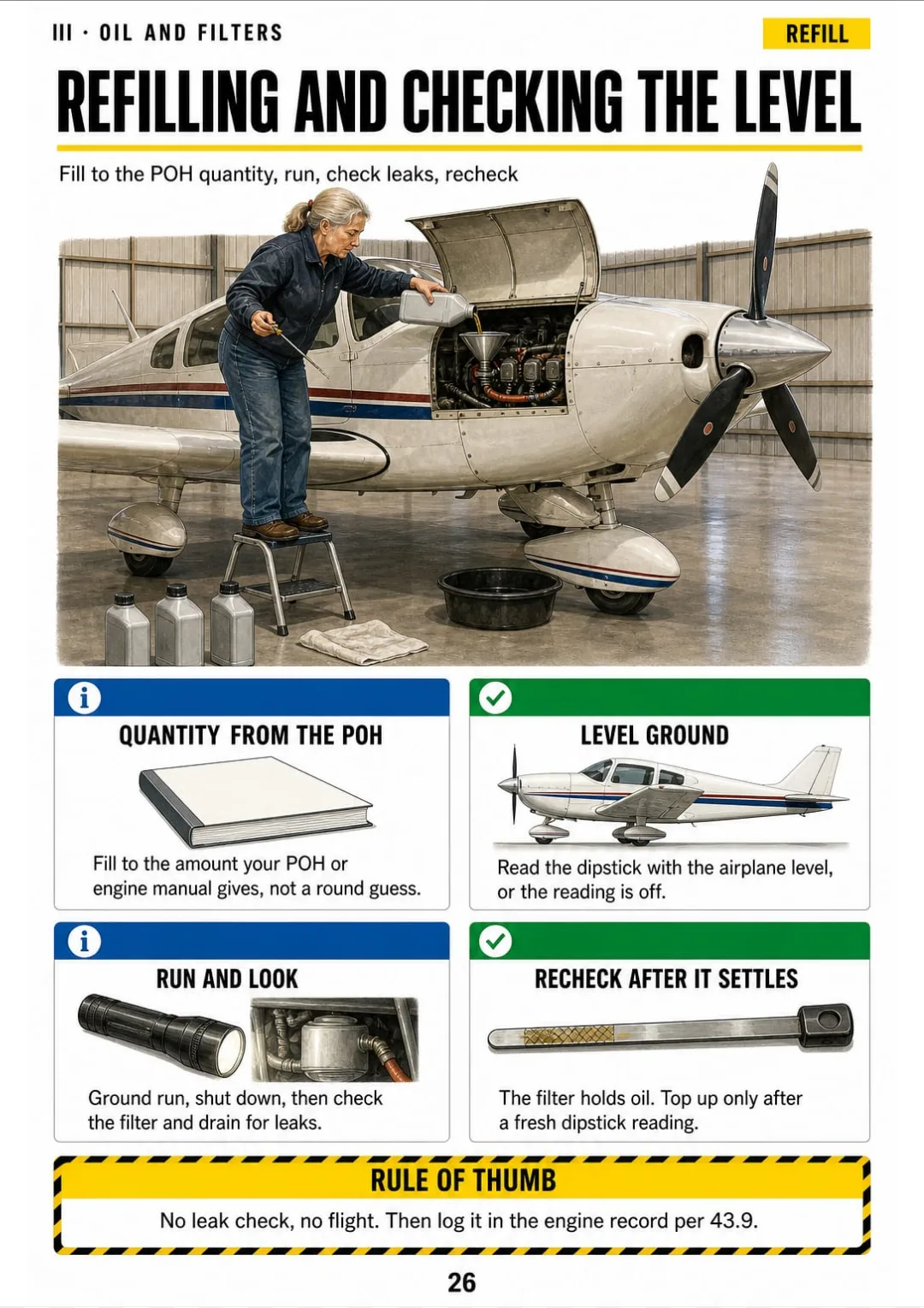
POH quantity, level dipstick, ground run, leak check, recheck the level
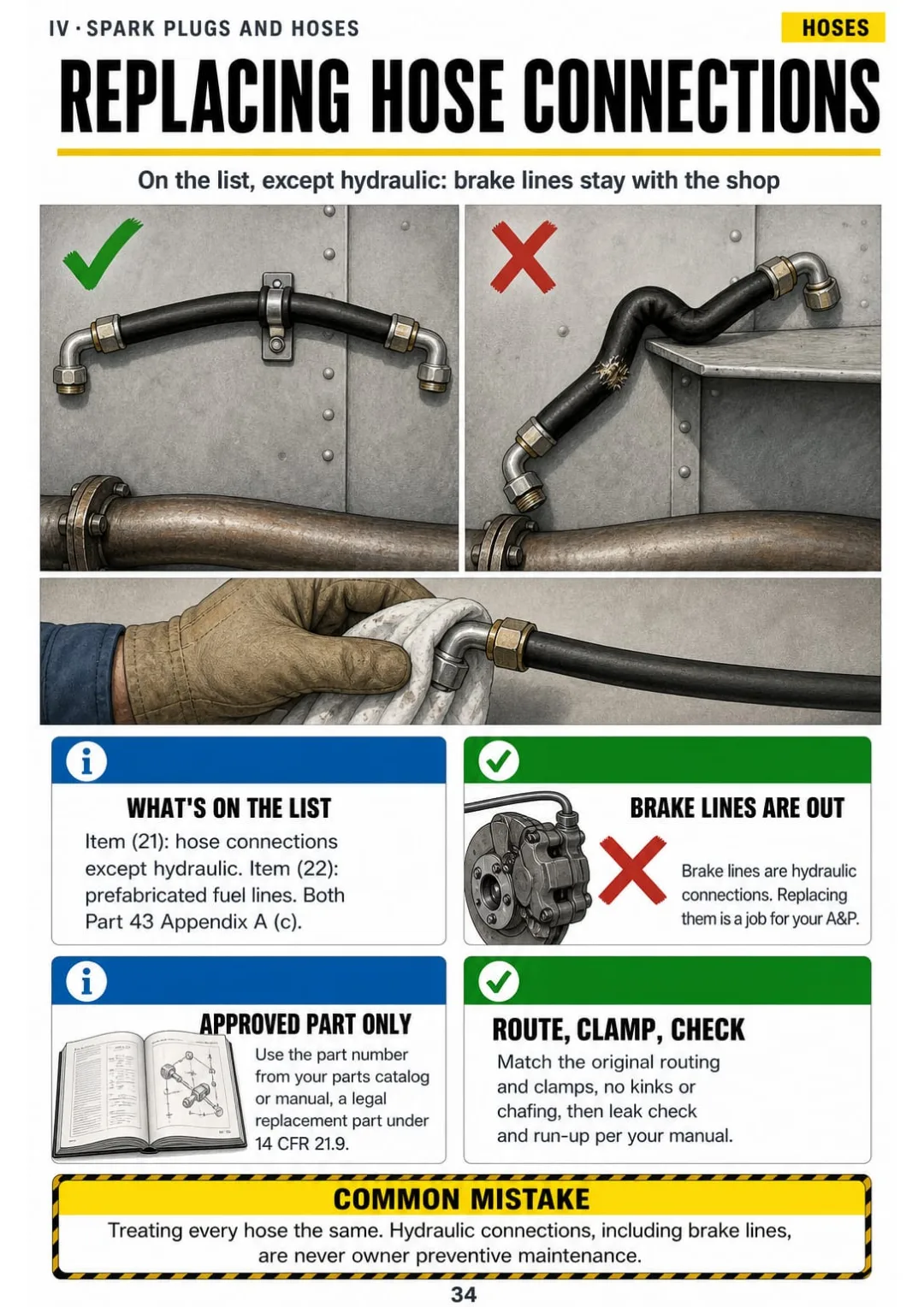
Hoses and prefabricated fuel lines yes, hydraulic connections no: approved part, clean routing, leak check.
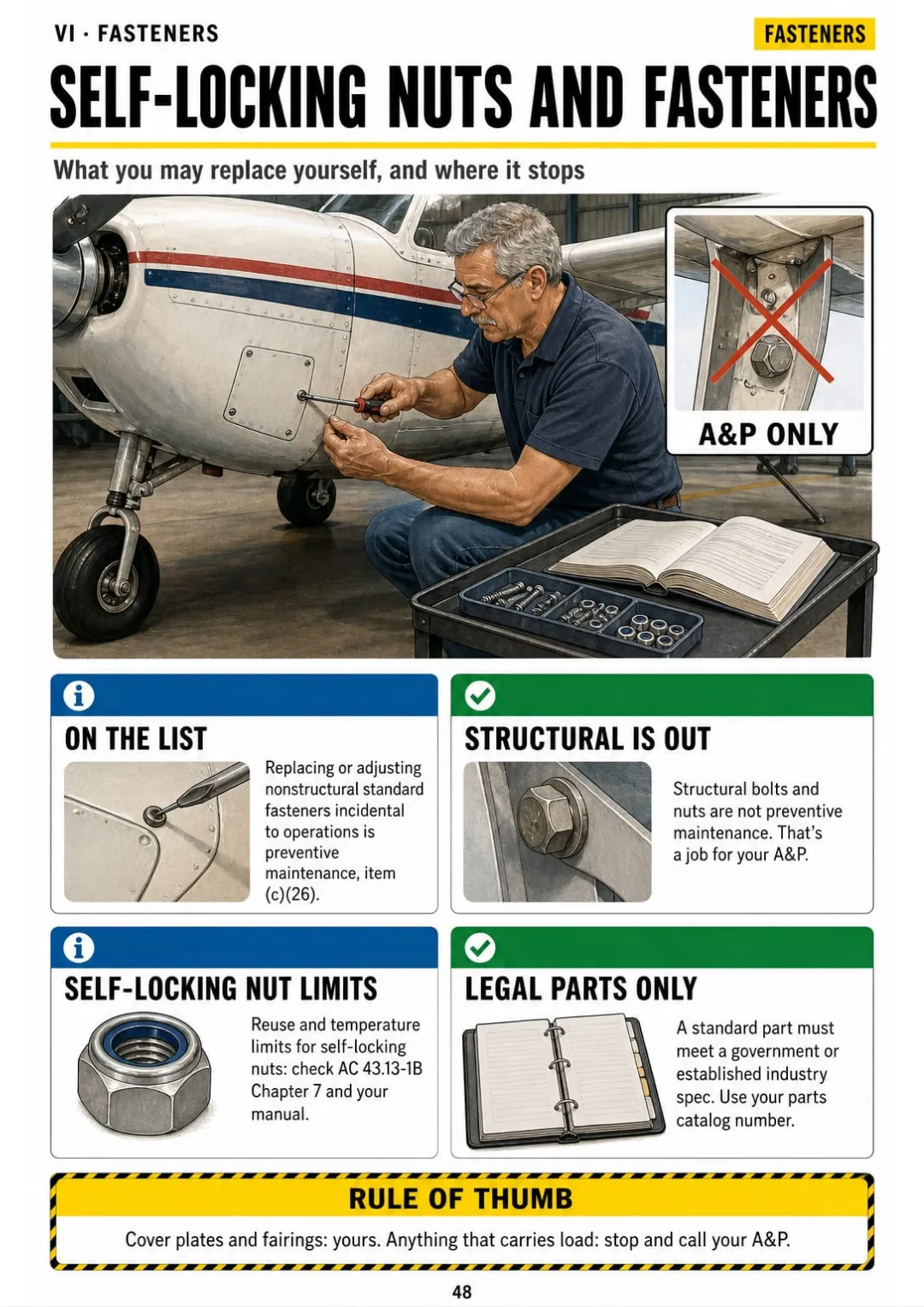
Item (c)(26): nonstructural standard fasteners yes; structural bolts and nuts go to the A&P.
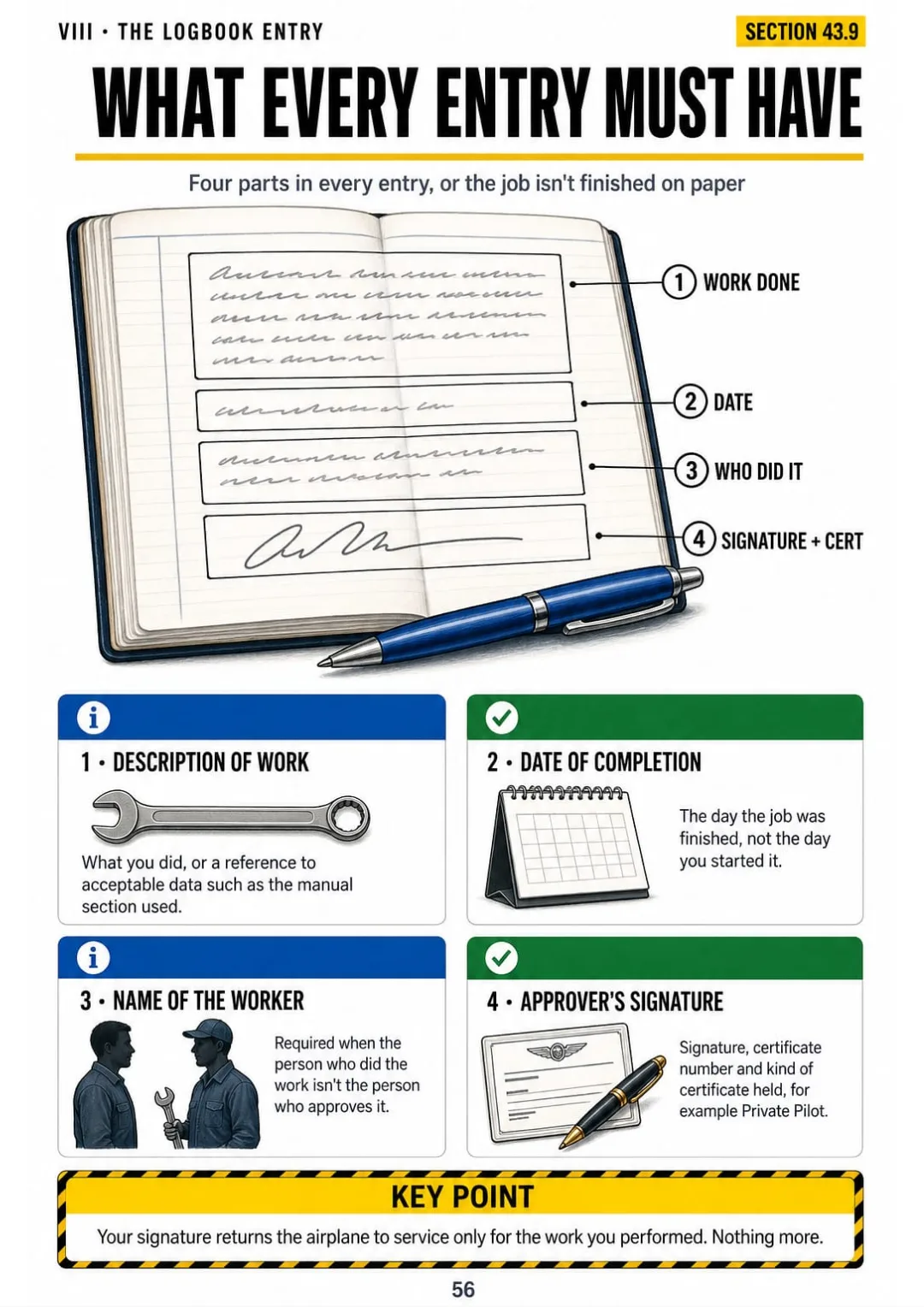
Section 43.9(a): work, date, name, signature with certificate number and kind of certificate.
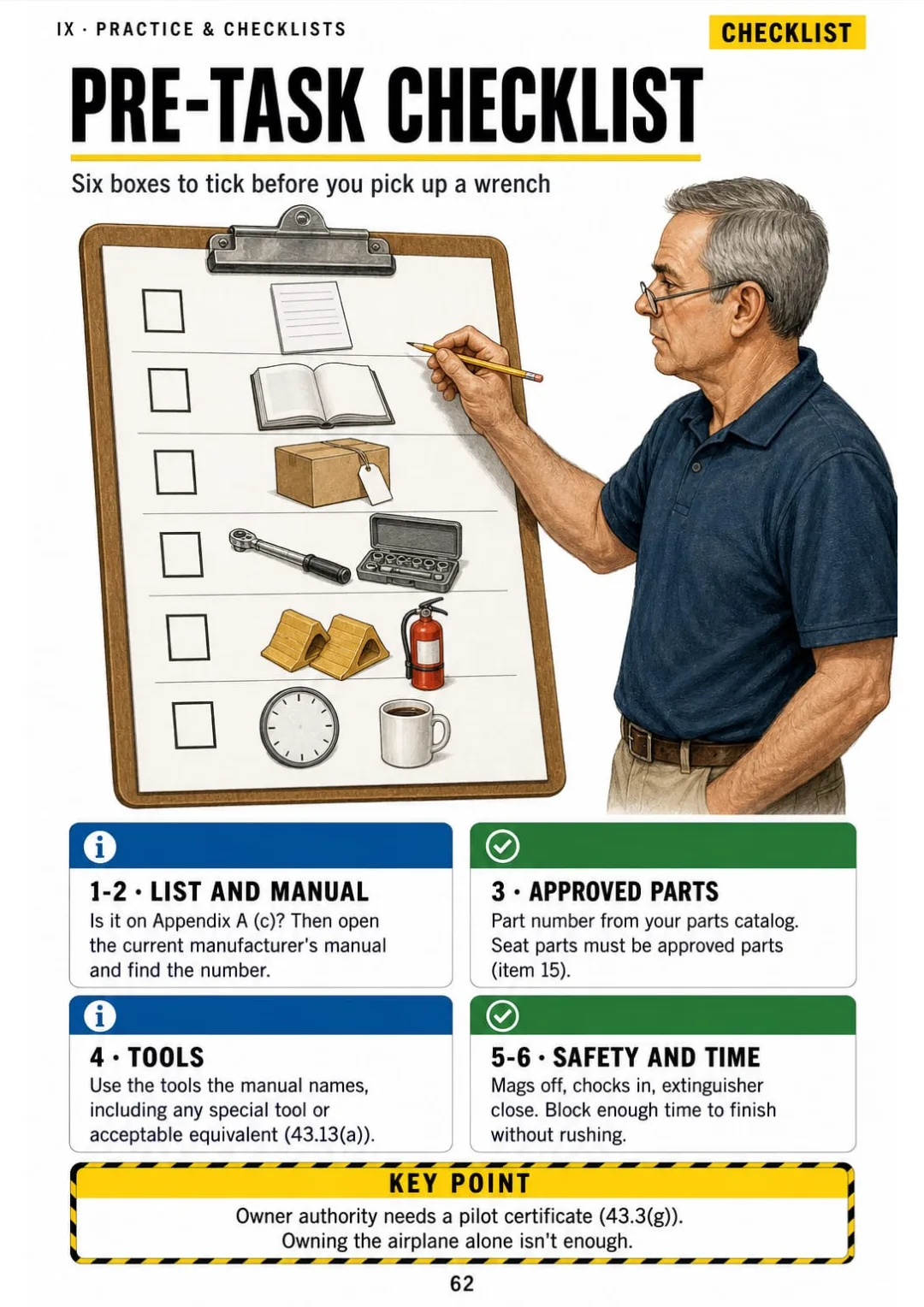
On the list? Manual number? Approved parts? Tools? Safety? Time? Tick all six first

Swipe to see more →

These are real pages from the book. The table of contents is the full one: 9 parts and 62 topics.

The Problem Isn't You. It's How It Was Explained to You.

You're on the hangar floor with a torque wrench in your hand and a spark plug ready to go in. Your manual gives the value in inch-pounds, the wrench reads foot-pounds, and you're not sure the click you just heard was the right one.

The manual covers it in paragraphs written for mechanics. Conversion, how to pull, when to stop and how to store the wrench are scattered across pages, and nothing shows you what a correct pull looks like.

12 in-lb = 1 ft-lb · smooth pull · stop at the click · store at lowest setting.

In the book, torque wrench basics is one page: the wrench drawn with the direction of the pull, 12 in-lb = 1 ft-lb in a box, stop at the click, store it at the lowest setting. One look and you know what to do.

Every other job works the same way: installing the new oil filter, reading the plugs, safety wire that pulls the right way, repacking wheel bearings, the logbook entry. Each one has its own page.

You understand the step and do it right there in the hangar. You open your manual only to check the number for your airplane, not to decode it.

COMPARE FOR YOURSELF

The Same Topic, Two Ways to Learn It

THIS
  • The manual: line after line
  • Owner limits explained only in words
  • You start the job still unsure
Prior to installation, inspect the spark plug threads and apply thread lubricant sparingly, taking care not to contaminate the electrodes. Install a new gasket, thread the plug by hand to avoid cross-threading, and tighten to the value specified in the applicable manufacturer's data, observing whether the specified value is expressed in inch-pounds or foot-pounds and ensuring that the torque wrench has been properly calibrated and set. Upon completion, return the wrench to its lowest setting for storage and record the work performed in the appropriate maintenance record.
FOR THIS
  • The red-X list in one drawing
  • The jobs that go to the mechanic in a box
  • You see it and you get it
Avionics swaps, database updates and anti-misfueling devices each come with conditions you must meet.
CONTENTS

Take a Look at the 9 Parts and 62 Topics

Inside: what's yours and what's not; before you open the cowling; oil and filters; spark plugs and hoses; tires, wheels and bearings; safety wire and fasteners; battery, lights and lubrication; the logbook entry; and practice with common mistakes. 66 pages, all illustrated.

IWhat's Yours, What's Not · pp. 5-11
  1. The owner rule in one drawing
  2. Preventive maintenance vs. maintenance vs. alteration
  3. The yes/no chart: your jobs at a glance
  4. The red-X list: always the mechanic
  5. Gray zones: when to ask before you start
  6. Approved data: your manual comes first
  7. Signing it back to service
IIBefore You Open the Cowling · pp. 12-18
  1. The 5-step page method
  2. Your owner toolbox
  3. Torque wrench basics
  4. Hangar safety before any job
  5. Finding the number in your manual
  6. Parts that are legal to install
  7. Removing and reinstalling a cowling
IIIEngine Oil and Filters · pp. 19-27
  1. Choosing the oil
  2. When to change it
  3. Draining the oil warm
  4. Removing the spin-on filter
  5. Cutting the old filter open
  6. Installing the new filter
  7. The suction screen and oil sample
  8. Refilling and checking the level
  9. Fuel strainer (gascolator)
IVSpark Plugs and Hoses · pp. 28-34
  1. Removing spark plugs without damage
  2. Reading the plugs
  3. Cleaning and gapping
  4. Rotating the plugs
  5. Reinstalling and torquing
  6. The run-up check after the job
  7. Replacing hose connections
VTires, Wheels and Bearings · pp. 35-42
  1. Tire pressure the right way
  2. Inspecting tires
  3. Jacking the airplane safely
  4. Removing a main wheel
  5. Splitting the wheel and changing the tire
  6. Cleaning and repacking wheel bearings
  7. Axle nut and cotter pin
  8. Nose strut servicing
VISafety Wire, Cotter Pins and Fasteners · pp. 43-48
  1. Why safety wire pulls the right way
  2. Double-twist method step by step
  3. Wire size and the details that get inspected
  4. Safety wiring a filter and a drain plug
  5. Cotter pins done right
  6. Self-locking nuts and nonstructural fasteners
VIIBattery, Lights, Lubrication and Cabin · pp. 49-55
  1. Servicing the battery
  2. Replacing the battery
  3. Bulbs and lenses
  4. Lubrication without disassembly
  5. Hydraulic fluid and brake reservoir
  6. Seats, belts and side windows
  7. Interior, fairings and small repairs
VIIIThe Logbook Entry · pp. 56-60
  1. What every entry must have
  2. Engine log, airframe log, or both?
  3. Sample entry: oil and filter change
  4. Sample entry: tires, plugs and bearings
  5. Keeping records the buyer will want
IXPractice, Checklists and Common Mistakes · pp. 61-66
  1. Ten common owner mistakes
  2. Pre-task checklist
  3. Post-task checklist
  4. When to stop and call your A&P
  5. Preparing for the annual
  6. Your one-page owner chart

One Page, One Topic, All Clear

Think of it this way:

It's Saturday morning, the cowling is off and the oil is draining warm. Next comes the new filter, and you want the gasket, the torque and the safety wire right the first time.

You open the filter page and see it drawn: oil on the gasket, the torque from the filter maker in a box, and the safety wire pulling the filter tight, with an arrow showing which way.

Hoses and prefabricated fuel lines yes, hydraulic connections no: approved part, clean routing, leak check.

Same with spark plugs, tire pressure, wheel bearings, the battery and the logbook entry: each one on its own page, with the steps always in the same order.

Aircraft Owner Maintenance Illustrated is 9 parts and 62 topics, all drawn, and at the end, checklists, ten common owner mistakes and your one-page owner chart.

What you see drawn, you don't have to memorize.

What's Inside Aircraft Owner Maintenance Illustrated:

Ipp. 5-11

What's Yours, What's Not

Know what you may do yourself before you pick up a wrench: the owner rule in one drawing, preventive maintenance vs. maintenance vs. alteration, the yes/no chart, the red-X list, gray zones, approved data and signing it back to service.

IIpp. 12-18

Before You Open the Cowling

The 5-step page method, your owner toolbox, torque wrench basics, hangar safety, finding the number in your manual, legal parts and the cowling off and on.

IIIpp. 19-27

Engine Oil and Filters

Choosing the oil, when to change it, draining warm, the spin-on filter, cutting it open, installing the new one, the suction screen, refilling and the gascolator.

IVpp. 28-34

Spark Plugs and Hoses

Removing plugs without damage, reading them, cleaning and gapping, rotating, reinstalling and torquing, the run-up check and hose connections.

Vpp. 35-42

Tires, Wheels and Bearings

Tire pressure, inspecting tires, jacking safely, removing a main wheel, changing the tire, repacking bearings, axle nut and cotter pin, and the nose strut.

VIpp. 43-48

Safety Wire, Cotter Pins and Fasteners

Why safety wire pulls the right way, the double-twist method, wire size, wiring a filter and a drain plug, cotter pins, self-locking nuts and nonstructural fasteners.

VIIpp. 49-55

Battery, Lights, Lubrication and Cabin

Battery service and replacement, bulbs and lenses, lubrication without disassembly, hydraulic fluid and brake reservoir, seats, belts, side windows and small interior repairs.

VIIIpp. 56-60

The Logbook Entry

What every entry must have, engine log or airframe log, sample entries for oil and filter, tires, plugs and bearings, and records a buyer will want.

IXpp. 61-66

Practice, Checklists and Common Mistakes

Ten common owner mistakes drawn wrong vs. right (the bonus turns them into cut-out hangar cards), pre- and post-task checklists, when to stop and call your A&P, preparing for the annual and your one-page owner chart.

At the end of the book: Ten common owner mistakes, pre- and post-task checklists and a one-page owner chart.
Plus: 2 Free Books

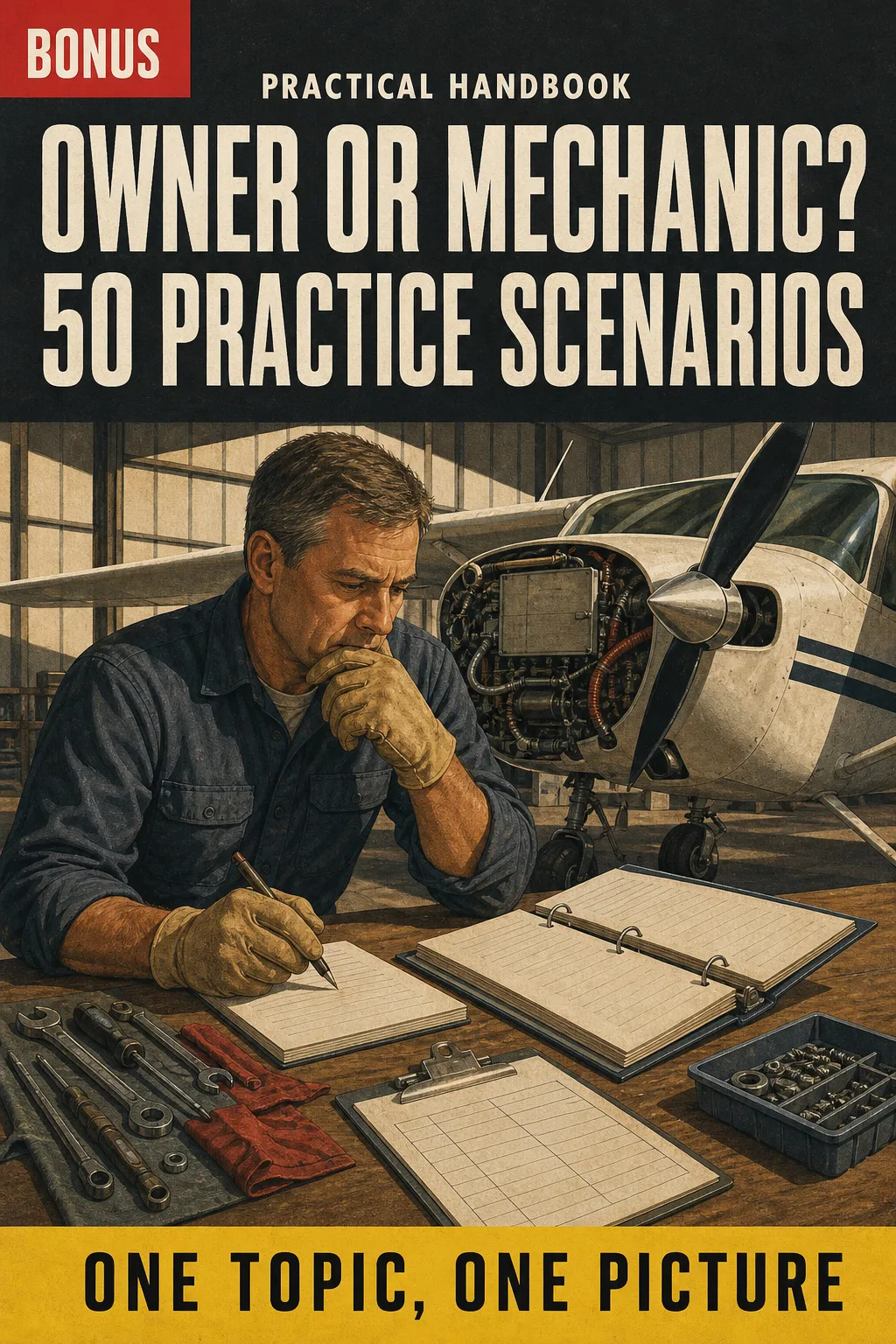
Owner or Mechanic? 50 Practice Scenarios

BONUS 1: «Owner or Mechanic? 50 Practice Scenarios»

Value on its own: US$ 17.90

Real hangar situations to answer yes or no, plus logbook entries to write yourself, so you know where the owner list ends before you pick up a wrench.

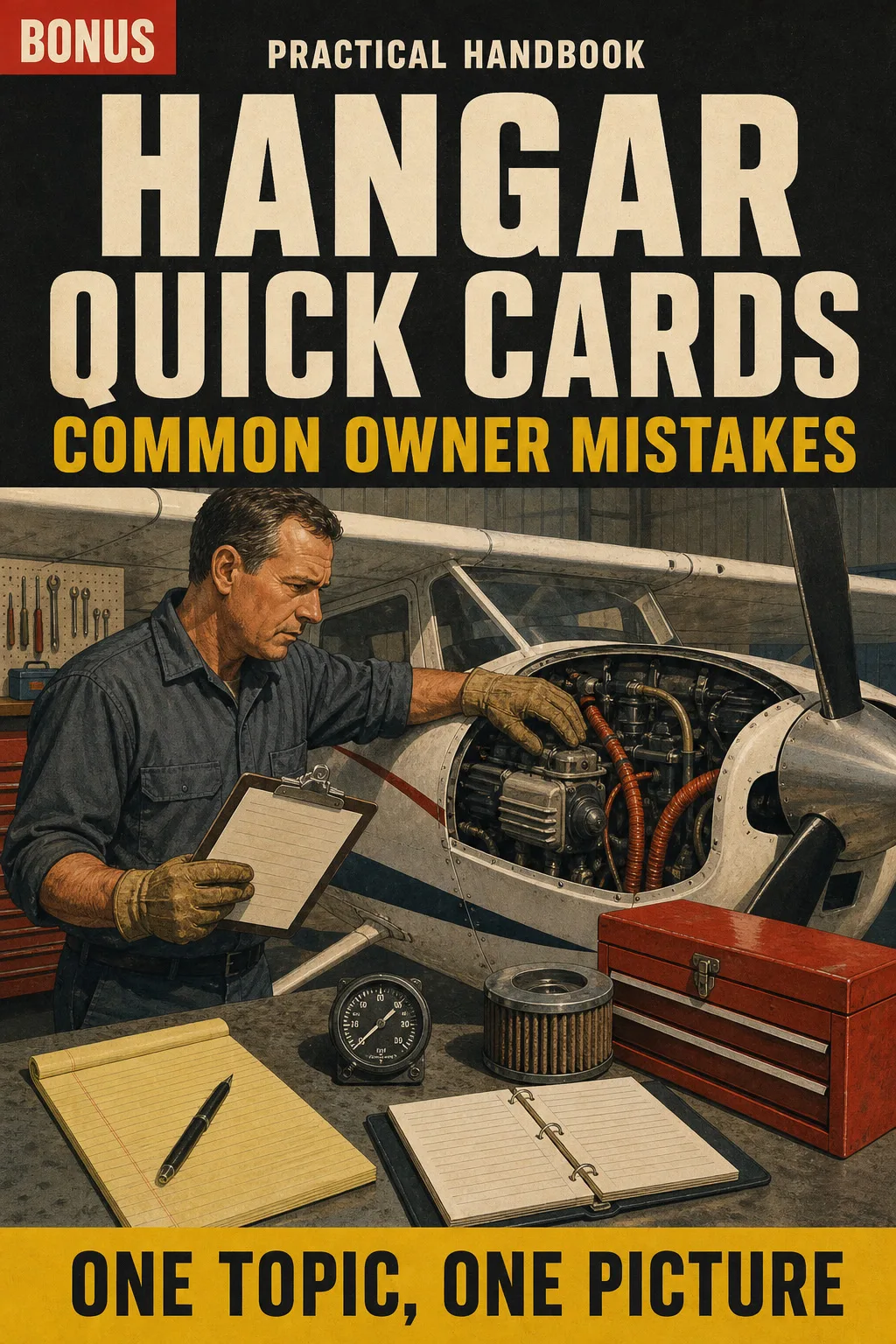
Hangar Quick Cards: Common Owner Mistakes

BONUS 2: «Hangar Quick Cards: Common Owner Mistakes»

Value on its own: US$ 14.90

The most frequent owner mistakes drawn before and after, on printable cards to keep in the flight bag or pinned in the hangar.

Aircraft Owner Maintenance Illustrated with 2 Free Books

  • Aircraft Owner Maintenance Illustrated: 66 illustrated pagesUS$ 63
  • BONUS 1: Owner or Mechanic? 50 Practice ScenariosUS$ 17.90
  • BONUS 2: Hangar Quick Cards: Common Owner MistakesUS$ 14.90
  • High-resolution PDF to printIncluded
Total value US$ 95.80
YOUR PRICE:
US$ 27
You save US$ 68.80
YES, I WANT AIRCRAFT OWNER MAINTENANCE ILLUSTRATED FOR US$ 27

📄 This is a digital PDF book sent to your email: nothing is printed or shipped.

Secure purchaseEncrypted payment30-day guarantee

PDF by email: We email you Aircraft Owner Maintenance Illustrated as a PDF, together with the two free books. It's a single payment: no installments, no extra charges.

Who This Book Is For

You just bought your airplane

You just bought your airplane

The yes/no chart shows what the owner list lets you do, and the toolbox and torque pages get you started on the right foot.

Your annual is coming up

Your annual is coming up

Safety wire, cotter pins and logbook entries drawn the way a mechanic expects to see them, plus a page to get the airplane and the paperwork ready.

You already do your own oil changes

You already do your own oil changes

Every task in the same 5 steps, with the number to check in your manual marked on the drawing. Print it and keep it in the hangar.

Everything You Get Today

US$ 95.80US$ 27
YES, I WANT AIRCRAFT OWNER MAINTENANCE ILLUSTRATED FOR US$ 27

📄 This is a digital PDF book sent to your email: nothing is printed or shipped.

30DAYS
GUARANTEE

30-Day Guarantee

Try Aircraft Owner Maintenance Illustrated for 30 days, bonus books included.

We refund everything if the file won't open, if the book isn't what you see here, if you were charged twice or if the email doesn't arrive. Just email us.

You pay once. No subscriptions.

Frequently Asked Questions

Is it for me if I own a piston single and want to do my own preventive maintenance?

Yes, if you hold a pilot certificate under Part 61 (sport pilots have a narrower rule), you own or operate the airplane, and it isn't used under Part 121, 129 or 135: that's who section 43.3(g) allows to do preventive maintenance. It's written for piston singles like the Cessna 172/182, Piper Cherokee or Bonanza, with Lycoming or Continental engines. The steps are general; the exact numbers always come from your airplane's manual, and each page tells you where to look.

Where does the content come from?

From 14 CFR Part 43 (section 43.3(g), section 43.9 and Appendix A) and FAA Advisory Circulars AC 43.13-1B and AC 43-12A, checked against their current versions. Each page follows the task as those sources describe it, step by step, and marks with a box every value you must take from your aircraft and engine manufacturer's manual and POH. If your manual says something different, your manual wins.

Is this official material?

No. It's an independent illustrated reference. It isn't published, approved or endorsed by the FAA or by any aircraft or engine manufacturer.

Does it replace my A&P mechanic or my airplane's manual?

No. It doesn't replace a certificated mechanic, required inspections or your manufacturer's manual. It helps you understand the jobs on the owner list and shows clearly when to stop and call your A&P.

Are the practice scenarios official FAA questions?

No. The 50 scenarios in the bonus are written for this book, based on typical hangar situations. They aren't official questions from any test or agency.

When and how do I get it?

The book and the 2 bonus books arrive as PDFs by email, at the address you enter at checkout.

Do I have to pay every month?

No. It's a one-time payment, with no subscription.

Can I have it on paper?

Yes. It's a printable PDF: print the whole book or just the pages you need and keep them in the hangar or your flight bag.

How does the refund work?

You have 30 days. We refund everything if the file won't open, if the book isn't what you see on this page, if you were charged twice or if the email doesn't arrive: just email us.

Before You Close This Page

No more rereading the manual without it sticking.

Safety wire, torque and the filter gasket: you see them drawn and that's it.

You walk into the hangar knowing where every step is.

Drawings make studying faster.

The book is right below.

One-time payment: US$ 27 · Guarantee: 30 days · PDF by email

YES, I WANT AIRCRAFT OWNER MAINTENANCE ILLUSTRATED FOR US$ 27

📄 This is a digital PDF book sent to your email: nothing is printed or shipped.